Distinguished iNANO Lecture by Professor Dieter Braun, Ludwig Maximilian University of Munich, Germany
Twelve Dogmas on the Origin of Life tested experimentally.
Info about event
Time
Location
iNANO AUD (1593-012)
Organizer
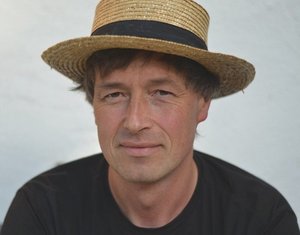
Professor Dieter Braun, Ludwig Maximilian University of Munich, Germany
The experimental lessons that we have learned in recent years are grouped along preconceptions in the field of the origin of life. Testing these preconceptions experimentally will advance the field and enable a simpler, more geologically compatible RNA world hypothesis. I would like to discuss experiments tackling the following preconceptions: • Life emerged in the liquid state • Activation is at the 5’ end of RNA • Life emerged at pH 7 • RNA is unstable and does not hybridize at high pH • Amino acids do not play an early role • RNA is only catalytic in the form of Ribozymes • Activated molecules are enough to drive the system •Life needs cells • Evolution needs continuous molecule synthesis • Early life required autotrophy • Molecules of Life are single sided • Origin of Life is slow.
Above experiments led us to a series of experiments that tested and allow to falsify a growing hypothesis on how life could have emerged. The outline of the hypothesis can be summarized as follows: The accumulation of polymerising molecules is exponentially amplified by various geological flow non-equilibria inside microscale porous rock matrices. The polymerisation of 2',3'-cyclic nucleobases at a pH of 9–10 that is geologically common will form autocatalytic replication networks by ligation. These networks should grow and recycle in wet-dry cycles between day and night. Replication is faster when the RNA oligomers are pinned, fed, and selected for length and replication speed by local geological flows. RNA self-purifies by dry polymerization and wet templated ligation into both left- and right-handed homochiral strands. The right-handed strands are likely selected by evolution much later. The geological flow settings can localize and feed modern biochemistry without the need for cells, demonstrating a long-term habitat for evolution. At heated gas bubbles, the local molecule population can accumulate in the presence of lipids into giant vesicles, initially only for lateral gene transfer, but creating a continuous environment for the evolution of cells. Cells, like ships, could the spread life across oceans and deserts to fully populate early Earth.
